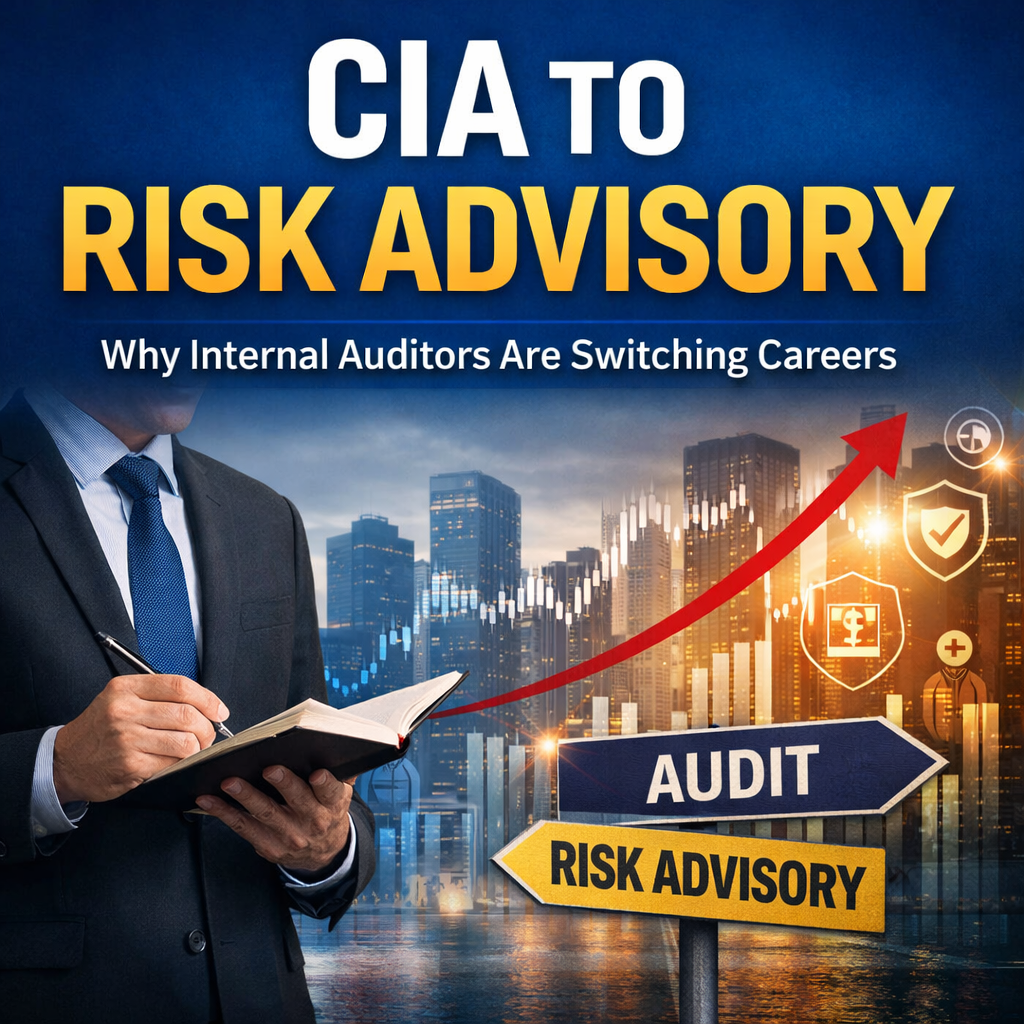
Executive Summary:
- The role of internal auditors has changed significantly over time. But expectations have grown. Today, organizations want professionals who can do more than just identify issues. That shift has created new opportunities.
- The CIA certification focuses on internal auditing, governance, risk management and internal controls. These skills are directly relevant to risk advisory work. Business risks are evaluated by CIA professionals and control systems are often assessed to improve efficiency and reduce uncertainty. The overlap is strong.
- Career paths have expanded. Naturally, questions like Is risk advisory a good career? is being asked more frequently. Risk advisory offers dynamic work, exposure to different industries and strong career growth potential.
Today organizations expect professionals to go beyond reporting and start contributing to decision-making. Business strategies must also be evaluated from a risk perspective. That’s where a new trend appears.
Many professionals with a CIA (Certified Internal Auditor) qualification are gradually moving into risk advisory roles. Let’s explore why this shift is happening and what it means for future career opportunities.
What Is CIA?
Before understanding the shift toward risk advisory, it helps to first understand what CIA stands for. The CIA is focused on internal auditing, risk management, governance and internal controls. It is highly respected.
Professionals who earn the CIA qualification develop expertise in evaluating internal processes, identifying risks and ensuring that organizations follow proper control systems. Business operations are reviewed by them. Risks are also assessed carefully.
The Changing Role of Internal Auditors
Earlier, reports were prepared. Issues were highlighted. That was the traditional approach. Today, organizations expect more value from their audit teams. The role has expanded. CIA professionals are now involved in evaluating business strategies, understanding operational risks and advising management on how to improve processes. Their work goes beyond audits.
Because of this shift, many CIA professionals are naturally transitioning into risk advisory roles where their skills can be applied more strategically. And the demand is increasing.
Why CIA Professionals Are Moving into Risk Advisory
The transition from internal auditing to risk advisory is not accidental. It is driven by multiple factors.
1. Increasing Focus on Risk Management
Organizations today operate in complex environments. Risks are identified early. Mitigation plans are developed. CIA professionals already have this expertise. CIA-certified professionals are well suited for risk advisory roles. The transition feels natural.
2. Demand for Strategic Insights
Modern businesses do not just want compliance reports. They want insights. Data is interpreted. Strategies are evaluated. Advisory roles become important. CIA professionals are trained to understand how risks impact business performance.
3. Growth in Advisory and Consulting Services
CIA professionals fit these roles well. Many consulting firms actively recruit candidates with CIA certification for risk advisory positions. And the demand continues to grow.
Is Risk Advisory a Good Career?
This is among the most frequently asked questions by professionals. Is risk advisory a good career? In many ways, the answer is yes. Business risks are analyzed by them and solutions are often recommended. The work is dynamic.
Unlike traditional roles that focus only on compliance, risk advisory involves problem-solving, decision-making and strategic thinking. That makes it interesting. Career growth is also strong in this field. Professionals can move into senior advisory roles, consulting positions or leadership roles in risk management. Opportunities expand over time.
CIA Job Opportunities in Risk Advisory
The shift toward risk advisory has created several CIA job opportunities across industries. Accounting firms hire CIA professionals. Consulting organizations also recruit them for advisory roles.
- Risk Analyst
- Internal Audit Consultant
- Risk Advisory Consultant
- Compliance Specialist
And the competition is increasing.
Is a CIA Certification Worth It?
Another important question often comes up. Is a CIA certification worth it? For professionals interested in internal auditing, risk management and advisory roles, the answer is often yes.
The certification provides specialized knowledge. CIA professionals are trained in risk assessment, internal controls, governance and compliance. The demand is growing.
The transition into risk advisory roles also increases the value of the certification. Professionals are not limited to traditional auditing careers. More options become available. Because of this, many professionals consider the CIA qualification as a strong investment in their long-term career growth.
The Future of CIA Professionals in Risk Advisory
The future looks promising for CIA-certified professionals. Expertise is required. CIA professionals are well positioned to take on roles that go beyond auditing. Risks are evaluated by them. Business strategies are also supported through their insights. Their role continues to evolve.

FAQs
- What is CIA?
The CIA is a globally recognized certification. Internal systems are reviewed by them and improvements are often suggested. The qualification is respected across industries. Many organizations prefer CIA-certified professionals for roles related to auditing, compliance and risk management.
- Is risk advisory a good career?
In many cases, yes. Professionals work closely with management teams and business risks are analyzed regularly. The work is varied.
- Is a CIA certification worth it?
Many professionals ask this question: Is a CIA certification worth it? For those interested in internal auditing, risk management and advisory roles, the answer is often yes. Career opportunities expand. The ability to move into roles such as risk advisory also increases the long-term value of the CIA qualification.
