
Executive Summary:
- Choosing a focused certification can shape your career direction clearly. The Enrolled Agent credential suits professionals who want to specialise in taxation without pursuing long, multi-discipline courses. It is regulated by the IRS. Global credibility is built steadily.
- EA certification attracts commerce graduates, accountants and working professionals seeking international exposure. Entry barriers are low. Commitment matters more. For tax-focused professionals, EA offers clarity, flexibility and long-term relevance.
Choosing the right certification depends on career goals, interest areas and long-term plans. Enrolled Agent certification suits those who want to work closely with individuals, firms and global clients. This credential is regulated by the US Internal Revenue Service. It focuses purely on tax practice. The scope is narrow. But the depth is strong.
Many finance professionals explore “What is enrolled agent” when they seek an international tax-focused qualification without pursuing a lengthy accounting degree. The EA credential is respected. It is also practical. Careers are shaped steadily through real client exposure rather than theory-heavy roles.
What Is Enrolled Agent?
An Enrolled Agent is a federally authorised tax practitioner in the United States. The designation is granted by the IRS. EAs are allowed to represent taxpayers before the IRS in audits, appeals and collections. This authority is significant. It builds trust.
The role focuses on taxation. Tax returns are prepared. Compliance is handled. Advisory support is provided. Unlike CPAs or attorneys, the EA certification concentrates only on tax law, which makes it ideal for specialists who prefer depth over breadth.
Who Is the Enrolled Agent Course Best Suited For?
The EA certification works well for professionals who enjoy taxation and regulatory work. It attracts commerce graduates, accountants, tax consultants and finance professionals. Many working individuals also choose this path because flexibility is offered. Study schedules can be adjusted.
Career shifts are supported. International exposure is possible. Professionals who do not want to pursue CA or CPA often consider EA as a focused alternative. Growth happens gradually. But stability remains consistent.
EA Course Eligibility
Eligibility criteria for the EA course are simple. No minimum educational qualification is mandated by the IRS. Anyone can apply. That simplicity attracts a wide audience.
Candidates must obtain a Preparer Tax Identification Number (PTIN). Exams are attempted. Or relevant IRS experience can be used as an alternative route. The entry barrier is low. Commitment matters more.
Enrolled Agent Course Duration
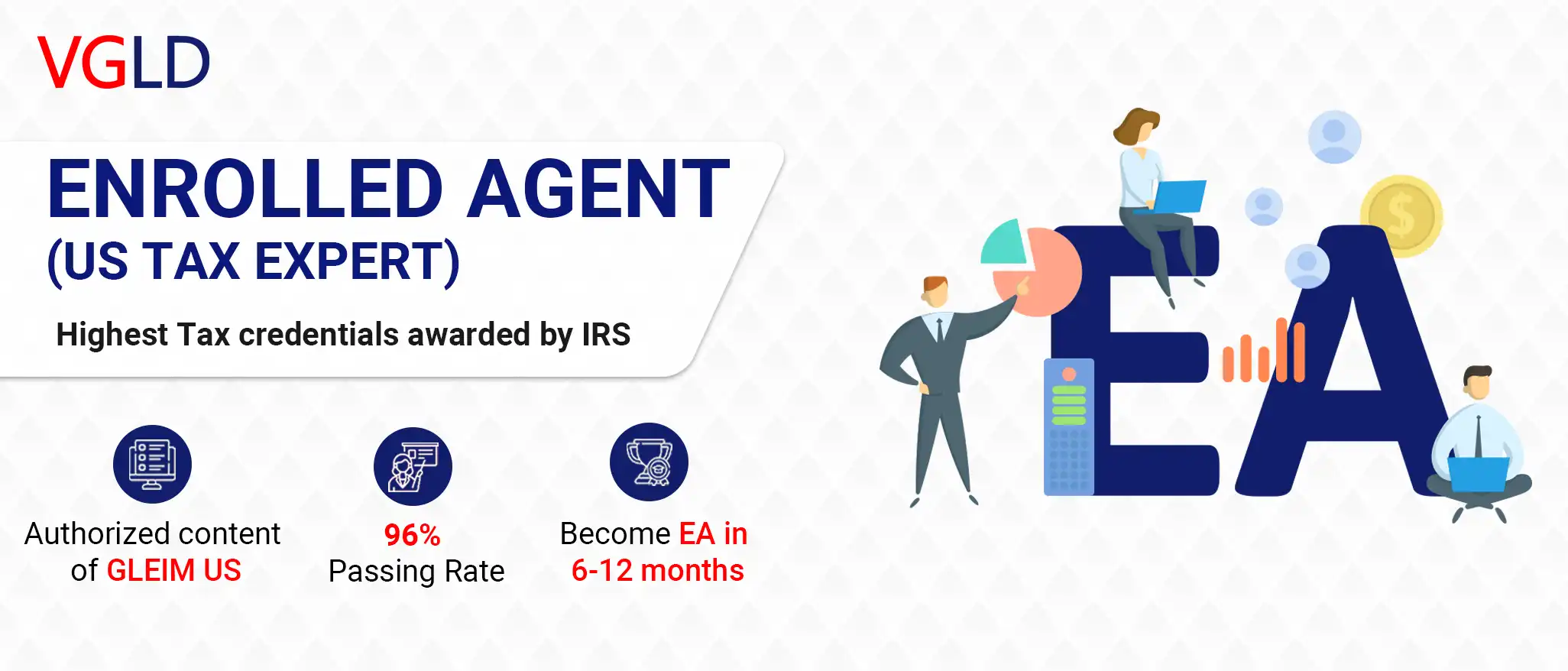
The Enrolled Agent course duration is flexible. Most candidates complete the program within 6 to 12 months. Timelines vary. It depends on preparation speed and exam attempts.
The exam consists of three parts. Individual taxation is tested. Business taxation is covered. Representation and ethics are included. Each part can be taken separately. Planning becomes easier.
Career Opportunities After EA
Strong Career Opportunities After EA are available across multiple sectors. EAs work with US tax firms, accounting practices, MNCs and outsourcing companies. Freelance practice is also common.
Roles include tax preparer, US tax consultant, compliance analyst and IRS representation specialist. With experience, independent practice becomes viable. Income grows with client base. Expertise is rewarded steadily.
Why EA Makes Sense for Tax-Focused Professionals
EA certification provides a direct route into international taxation. It avoids unrelated subjects. The focus stays sharp. Knowledge is applied daily.
Professionals gain authority. Client trust improves. Global exposure is achieved without relocation. For those who enjoy tax laws, compliance and advisory roles, EA remains a practical and respected choice.
Conclusion
Enrolled Agent certification fits professionals who want clarity and focus in their careers. Taxation becomes the core skill. Growth is steady. Recognition is earned through practice.
The path is flexible. The credential is global. If taxation interests you deeply and client-facing work appeals to you, EA can be a strong career move built on precision rather than volume.

FAQs
- What is Enrolled agent certification best known for?
It focuses purely on taxation. Authority to represent clients before the IRS is provided.
- Who should consider pursuing the EA course?
Commerce and accounting graduates benefit greatly. Working professionals are also supported through flexible study options.
- Is prior accounting knowledge required for EA eligibility?
No formal education requirement is imposed. Understanding of basic taxation helps.
- What kind of roles are available after completing EA?
Tax consultant roles are common. Compliance and advisory positions are also offered across firms.
- Does EA certification support international careers?
Yes, global exposure is gained through US tax work. Career mobility improves over time.
