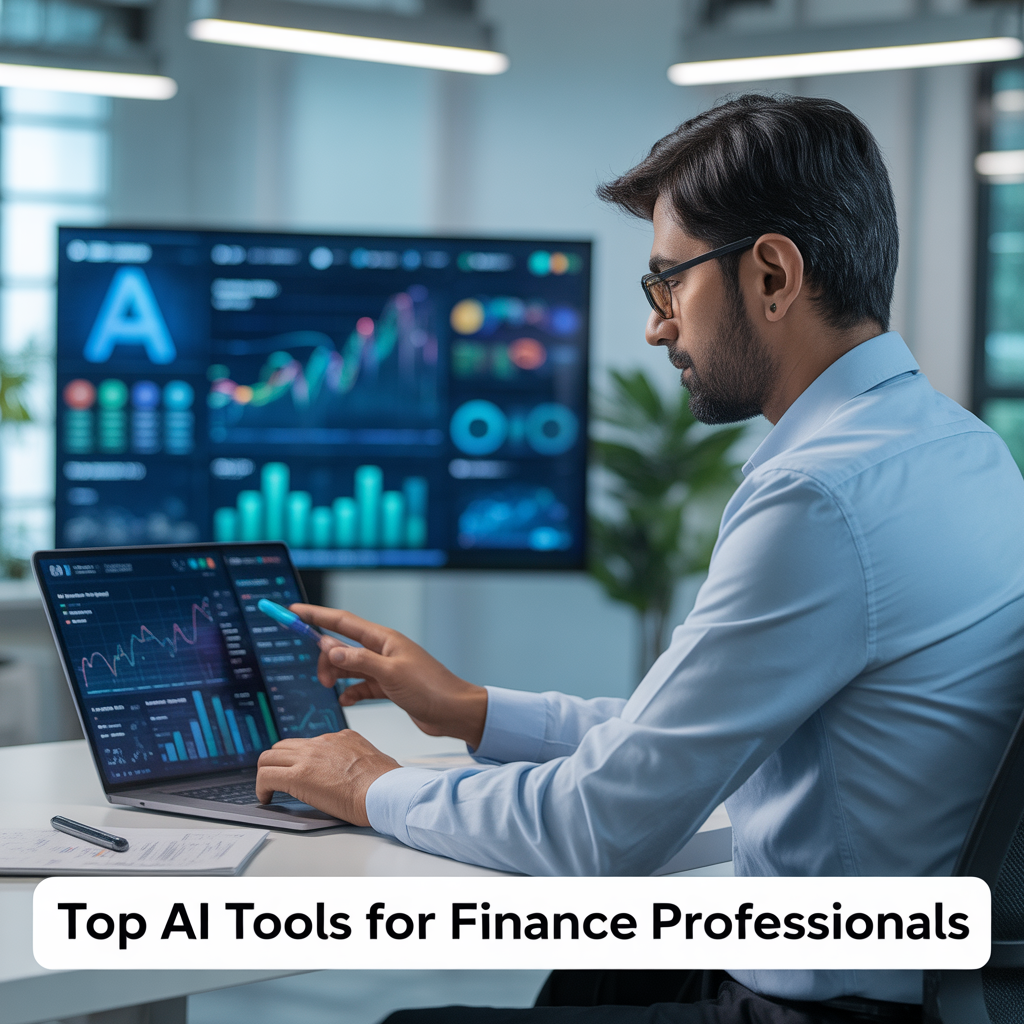
Executive Summary:
- Finance functions are evolving rapidly as AI becomes deeply embedded in everyday workflows. Manual processes are being reduced. AI tools now support analysis, reporting, forecasting and compliance across industries. Efficiency is being improved. Strategic thinking gains more space.
- Professionals who adopt AI early experience faster decision-making and stronger accuracy. Errors are minimised. From accounting automation to market intelligence, these tools help finance teams handle complexity with confidence. Growth is accelerated. Careers become more future-ready.
Finance teams no longer rely only on spreadsheets and manual reviews. Workflows are being transformed. Artificial intelligence is reshaping how analysis, reporting and decision-making are handled across organisations. Faster insights are delivered. And accuracy is being improved at every level.
Professionals now use AI tools in finance to manage large datasets, detect risks and support strategic planning. This shift feels gradual. But its impact is already significant. Routine tasks are automated. Time is being redirected toward higher-value thinking.
Why AI Matters in Modern Finance Roles
AI reduces repetitive effort. Errors are minimised. Finance professionals gain more time to analyse trends and advise management. Decisions become data-backed. Confidence improves naturally.
As organisations scale, complexity increases. That complexity is managed better through intelligent systems. AI supports forecasting, fraud detection, budgeting and compliance. Efficiency becomes measurable. Growth follows.
Top AI Tools Used in Finance Today
ChatGPT & AI Assistants for Financial Analysis
Finance teams use AI assistants to summarise reports and interpret data. Manual effort is reduced. These tools help explain complex concepts clearly. They assist in scenario analysis. Productivity increases noticeably.
They are especially useful for research, management commentary and internal documentation. Accuracy still requires review. But speed improves dramatically.
Microsoft Copilot (Excel & Finance Workflows)
Excel remains central to finance. AI has been embedded into it. Microsoft Copilot automates formulas, trend analysis and report generation. Data patterns are highlighted. Errors are flagged early.
Finance experts use this tool to expedite forecasting and budgeting. Learning curves stay manageable. Efficiency is enhanced.
Power BI with AI Insights
Visualisation matters. Insights are better understood when data is clear. Power BI uses AI to detect trends, anomalies and performance drivers automatically. Reports become interactive. Decision-making improves.
This tool is widely used in management reporting and performance reviews. Data storytelling becomes stronger. Stakeholders engage more.
IBM Watson for Financial Intelligence
Watson is used for advanced analytics. Large datasets are processed efficiently. Risk patterns are identified early. Compliance monitoring is strengthened.
Banks and large enterprises rely on it heavily. Complex problems are simplified. Strategic decisions gain depth.
Kensho (Financial Data & Market Analysis)
Kensho focuses on market intelligence. It analyses financial events, trends and macroeconomic data quickly. Investment teams depend on it. Patterns are detected faster than manual analysis.
This tool supports portfolio decisions and market research. Speed is its strength. Accuracy remains high.
Zeni & Vic.ai (AI Accounting Platforms)
Accounting processes are being automated. Transaction categorisation is handled by AI. Zeni and Vic.ai streamline bookkeeping and expense management. Anomalies are flagged instantly. Financial close cycles become faster.
These tools are especially useful for startups and growing businesses. Costs are controlled better. Visibility improves.
Free AI Tools for Finance and Accounting
Not every organisation needs paid platforms. Several Free AI tools for finance and accounting offer strong value. ChatGPT (basic versions), Google Sheets AI features and Power BI free editions are widely used.
They support analysis, automation and reporting. Learning becomes accessible. These tools are ideal for students and fresh professionals. Skills can be built early. Confidence grows steadily.
Which Is the Best AI Tool for Finance?
This question is common: Which is the best AI tool for finance? The answer depends on the role. Analysts benefit from Power BI and Copilot. Accountants gain value from Zeni or Vic.ai. Strategic teams rely on Watson or Kensho. No single tool fits all. Needs define the choice. Adaptability matters most.
AI literacy is becoming essential. Finance professionals are expected to understand tools, not just numbers. These capabilities now form part of the Best Business Skills employers seek. Those who adapt stay relevant. Those who don’t risk stagnation. Learning AI tools improves career flexibility. Problem-solving becomes sharper. Growth accelerates.
How Finance Professionals Should Start Using AI
Start small. Tools should be explored gradually. Begin with automation and reporting support. Then move into analytics and forecasting. Comfort develops with use.
Ethical judgement remains critical. Human oversight is always required. AI supports decisions. It does not replace responsibility.
Conclusion
AI is no longer optional in finance. It has become integral. Efficiency improves when the right tools are adopted thoughtfully. Growth becomes sustainable. Careers evolve faster.
Finance professionals who embrace AI gain an advantage. Their work becomes strategic. Their insights carry more weight. And long-term relevance is secured.
FAQs
- Why is the use of AI tools in finance becoming more significant?
AI helps automate repetitive tasks and improve analysis accuracy. Time is saved. Finance teams focus more on insights and strategy. Work quality improves. Pressure reduces.
- Can freshers in finance use AI tools effectively?
Yes, freshers can start with basic AI tools easily. Learning is supported. These tools help build confidence early. Skills develop faster. Adaptability increases.
- Will AI tools replace finance professionals?
AI is used as support. Judgement and accountability remain human-driven. Roles evolve. Value shifts toward analysis.
- Do AI tools require advanced technical knowledge?
Most tools are made to be simple to use. Training is minimal. Finance knowledge matters more than coding skills. Comfort builds with practice. Usage becomes natural.
