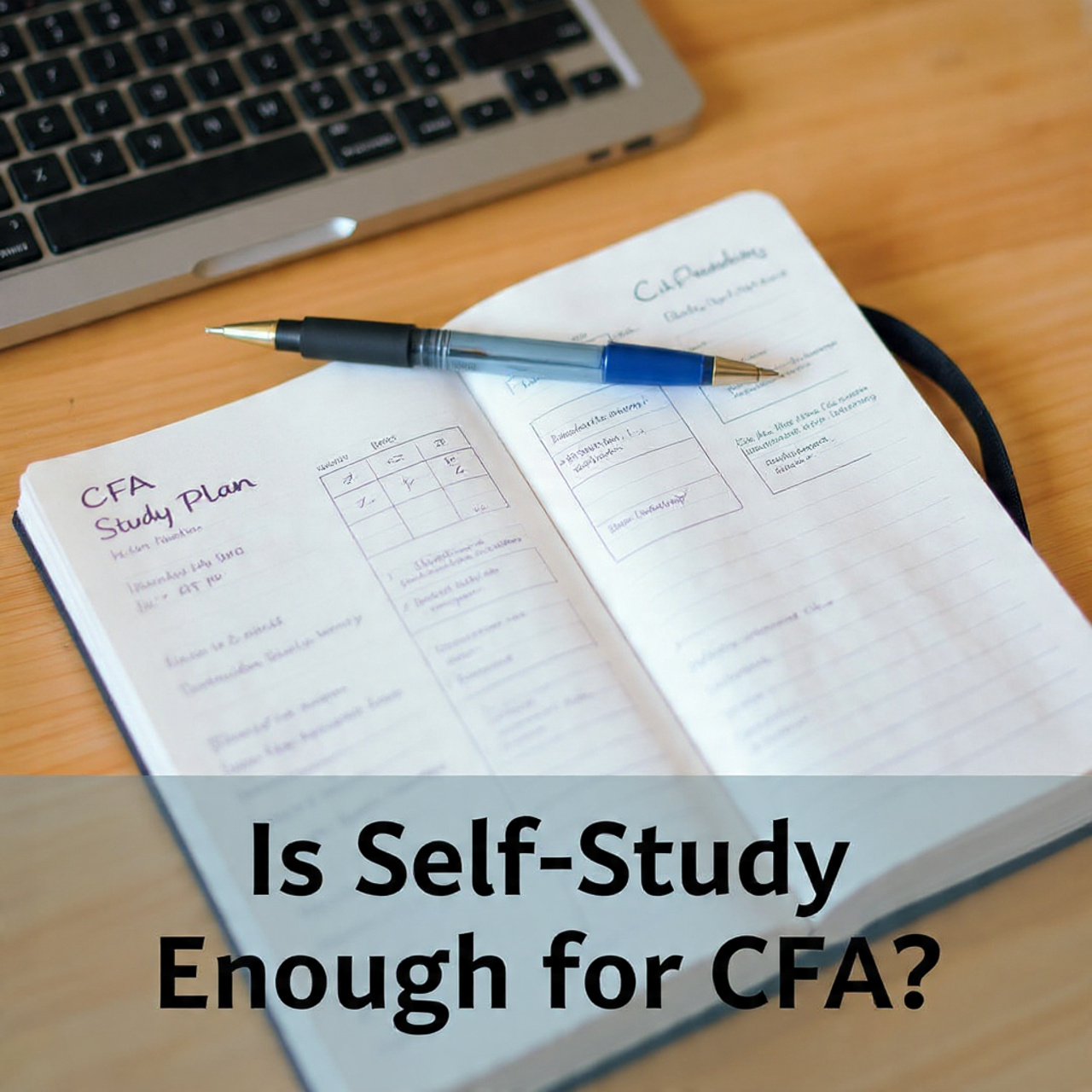
Executive Summary:
- Many candidates question whether self-study is enough to clear the CFA program. The doubt is understandable. Self-study gives flexibility and control. That freedom is often appreciated. Candidates set their own pace, plan revision cycles and focus on weak areas strategically. Discipline is required. When consistency is maintained, results usually follow.
- Coaching is helpful for some learners. It is not essential. Many aspirants successfully clear exams by relying on official material, practice questions and mock tests. The CFA charter values outcome over method. Strong preparation always shows in performance.
Many aspirants enter the finance world with one big question in mind. Is self-study really enough for such a demanding qualification?
The CFA program has a reputation for depth, discipline and consistency. That reputation is deserved. Yet thousands of candidates clear each level every year without formal coaching.
Understanding the CFA Program Before You Decide
The CFA curriculum is designed to test concepts, application and judgment. It is not built for surface learning. You are expected to understand ethics, financial reporting, portfolio management and valuation in a connected way. That expectation is made clear from Level 1 itself. A structured mindset becomes essential very early.
The syllabus is released officially each year. Study material is already provided. This makes independent preparation technically possible. But possibility does not always equal ease.
Can I Pass CFA with Self-Study?
Yes, many candidates do. The exams have been cleared globally through self-study for years. When you study on your own, you have more control over the depth, pace and schedule.
Self-study works best when time is managed realistically. Candidates who treat it like a long project usually progress better. Short bursts rarely work here.
Can CFA Level 1 Be Done Without Coaching?
Level 1 focuses heavily on concepts and basic application. It is often considered the most suitable level for self-study. Reading, practicing and revising can be handled independently by many learners. This level builds the base. If the base is strong, later levels feel less overwhelming.
However, some candidates struggle with structure. Topics may feel disconnected initially. Coaching helps bridge those gaps for certain learners. But it is not mandatory for success. Self-study remains a realistic option when supported by discipline.
What Makes Self-Study Work for CFA?
You need a plan. A realistic timetable is usually followed by better outcomes. Weekly targets help reduce stress. Mock exams reveal weak areas clearly. Revision cycles improve retention far more than first-time reading.
Practice questions are crucial. They train your thinking style. You start learning how the exam wants answers, not just what is correct. This shift matters. Many failures happen due to poor exam approach, not lack of knowledge.
Where Self-Study Becomes Challenging
Long gaps between study sessions weaken momentum. Concepts start fading quietly. Self-awareness becomes important at this stage.
Some topics are dense. Ethics and financial reporting require repeated exposure. Without guidance, confusion can last longer. That delay impacts confidence.
Self-Study vs Coaching: A Practical View
- Coaching offers structure. Doubts are addressed faster. Peer pressure keeps many learners accountable. This environment suits some personalities. Others feel restricted by fixed schedules.
- Self-study gives control. Freedom is enjoyed. But responsibility increases. You become your own mentor. Not everyone prefers that role.
Career as a CFA After Clearing Levels
A career as a CFA after clearing all the levels can opens doors globally. Investment banking, equity research, portfolio management and corporate finance are among the areas where roles are expanded. The learning is respected. Employers value the discipline behind the designation. Career growth often accelerates over time.
Self-study does not reduce the value of the charter. The certification remains the same. What matters is competence. How you prepared becomes irrelevant once you perform well. Results speak louder than methods.


Final Thoughts
Self-study is possible. You need consistency, patience and honest self-evaluation. Shortcuts rarely work. But commitment usually does.
If you enjoy structured independence, self-study can suit you well. If guidance keeps you focused, coaching might help. Both paths can lead to success in the CFA journey. The effort matters more than the format.
FAQs
- Can I pass CFA with self study?
Yes, many candidates clear all levels through self-study. It has been done repeatedly. You need a clear plan, regular practice and honest revision. Consistency matters more than study hours. Results improve when discipline is maintained.
- How many hours should I study daily for CFA self-study?
Study time is often adjusted based on schedule and background. Most candidates aim for steady daily sessions rather than long bursts. Consistency is preferred. Burnout is avoided this way.
- Does self-study affect a Career as a CFA?
No, it does not. Employers value the designation, not the preparation method. Skills and knowledge are assessed on the job. The CFA charter remains the same. Performance defines career growth.
