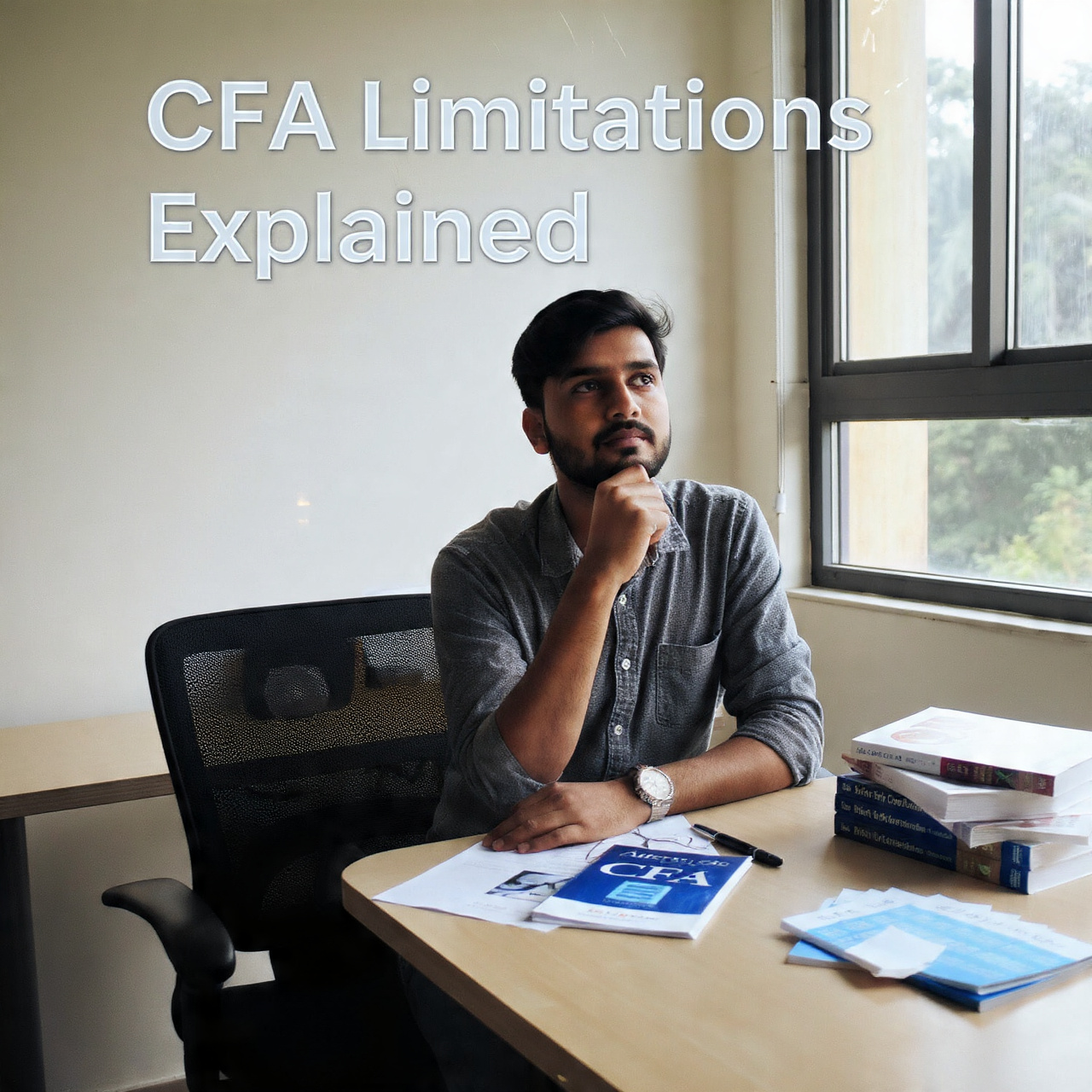
Executive Summary:
- The CFA qualification carries global recognition. Its limitations are often overlooked. Many candidates begin the CFA course expecting rapid career rewards but progress is shaped by time, discipline and repeated exam pressure. Reality settles in slowly.
- The journey is demanding. Long study hours are required. While strong expertise in investment and finance is developed, flexibility across other domains remains limited and outcomes are not immediate. Trade-offs are involved.
- For some professionals, CFA aligns perfectly with long-term goals. For others, alternatives may fit better. Understanding the drawbacks early allows aspirants to choose paths that match their timelines, finances and career direction. Clarity protects effort.
The CFA designation is widely respected. Its challenges are often understated. Many aspirants begin the journey with high expectations but the realities of time, effort and outcomes are gradually understood. Awareness helps.
While the CFA course offers strong credibility in investment and finance roles, it is not without limitations. Some drawbacks are structural. Others depend on individual career goals, timelines and learning preferences. Context matters.
What the CFA Course Truly Demands
The CFA course is academically rigorous. A long commitment is required. Candidates are expected to clear three levels, each demanding hundreds of study hours and deep conceptual understanding. Pressure builds slowly.
Success is not guaranteed. Pass rates remain low globally. Even strong finance graduates often need multiple attempts and progress can be delayed due to work or personal commitments. Patience is tested.
Time Investment and Slow Career Impact
CFA is not a quick qualification. Years are consumed. Most candidates take 1.5 to 3 year on average years to complete all levels along with the required work experience. Momentum feels slow.
Immediate career transformation is rarely seen. Returns are delayed. Unlike some professional courses that deliver early role changes, CFA rewards patience over time. Timing becomes critical.
Limited Scope Outside Core Finance Roles
CFA is highly specialised. Its focus is narrow. The curriculum is designed mainly for investment management, equity research, portfolio management and related domains. Flexibility is limited.
Professionals aiming for accounting, audit, taxation or broader business leadership roles may find the scope restrictive. Career mobility is reduced. In such cases, alternatives may align better with long-term goals. Fit matters.
Exam Structure and Psychological Pressure
The examination format is intense. Stress is experienced repeatedly. Single exam days determine months of preparation and failure often leads to burnout or loss of motivation. Resilience is required.
Balancing work and study becomes difficult. Sacrifices are made. Many candidates pause or drop out midway due to exhaustion rather than lack of ability. Burnout is real.
Cost and Coaching Dependency
The CFA course involves significant cost. Fees accumulate. Registration, exam charges, study material and retakes together create a financial burden. Planning is essential.
Most candidates also depend on coaching support. Self-study is attempted. Choosing the best CFA coaching in India becomes important for guidance, structure and exam strategy, especially for working professionals. Support matters. For many, the best CFA coaching in India helps manage complexity but it also adds to overall expenses. Affordability becomes a factor.
Alternatives to CFA: Exploring Other Options
CFA is not the only path to success in finance. Choices exist. Depending on career direction, qualifications like ACCA, US CPA, US CMA or MBA Finance may offer faster or broader outcomes. Comparison helps.
These alternatives often provide flexible exams, quicker completion and wider role access across industries. Versatility increases. For candidates seeking managerial or global accounting roles, such options can feel more practical. Alignment matters.
Is CFA Still Worth It?
The value of CFA remains strong. Its limitations must be acknowledged. For those targeting core investment roles with long-term commitment, CFA continues to hold weight. Clarity helps.
However, it is not a universal solution. Careers differ. Understanding the disadvantages answers an important question often asked: What are the disadvantages of CFA? Informed choices last longer.
Final Thoughts
CFA builds depth. It demands endurance. The qualification rewards those with clear goals, strong discipline and patience for delayed outcomes. Focus matters.
For others, alternative certifications may deliver faster results and broader flexibility. Paths differ. Choosing wisely matters more than choosing popularly.
FAQs
- What are the disadvantages of CFA?
The CFA course requires a long-term commitment. Time is heavily consumed. Candidates often face low pass rates, delayed career impact and high exam pressure, especially while managing full-time jobs. Burnout can occur.
- Is CFA difficult to complete while working full-time?
Balancing work and study is challenging. Stress is experienced. Most candidates need strong time management and external support to stay consistent across multiple exam cycles. Discipline decides outcomes.
- Are coaching classes necessary for CFA?
Self-study is possible. Support is often needed. Many candidates rely on structured guidance and choosing the best CFA coaching in India can help manage complexity and exam strategy. Direction matters.
- What are good alternatives to CFA?
Several options exist. Choices vary. Courses like ACCA, US CPA, US CMA or MBA Finance may offer quicker completion, broader role access and faster career movement. Alignment matters more than popularity.
