Executive Summary:
- Many students hesitate before enrolling because they hear mixed opinions about the ACCA exam difficulty level. Perceptions are often exaggerated. ACCA is a globally recognised qualification designed to test application, analysis and professional judgement rather than rote memorisation. Its structure gradually increases complexity from Applied Knowledge to Strategic Professional level.
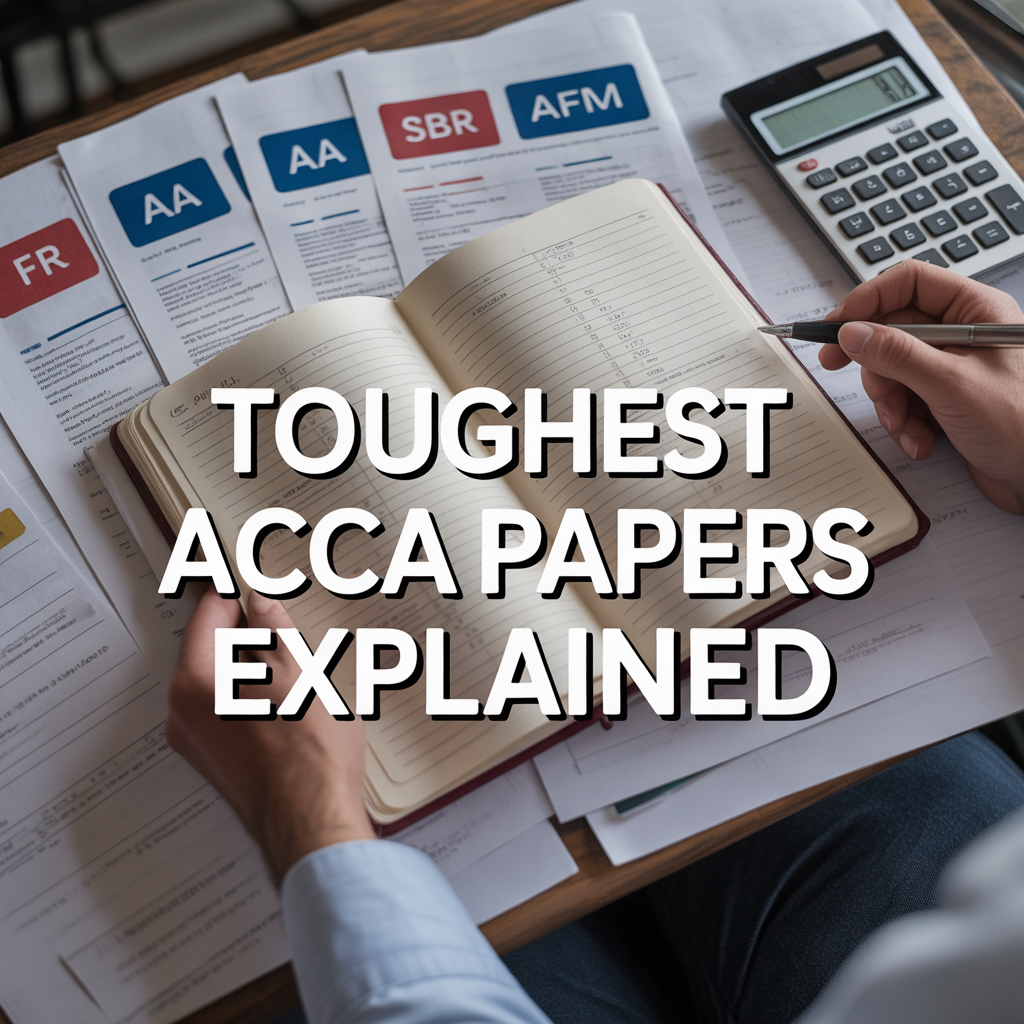
- Students frequently ask, Which is the toughest subject in ACCA? There is no universal answer. Advanced-level papers such as Strategic Business Leader, Advanced Financial Management or Advanced Audit often feel demanding because integration and professional skills are tested together but strength areas differ from student to student. Understanding what is ACCA, reviewing the complete ACCA course details and planning realistically reduce unnecessary anxiety.
Due to the difficulty of exam conflicts, many students are hesitant to enrol. It’s okay to have concerns. Some people point out the depth of concepts and application-based testing. Others say the ACCA exam’s difficulty level is manageable with discipline. Views differ.
Before judging difficulty, one must first understand what ACCA is and how the structure of the qualification is designed. The framework is global. Standards are high. The exams are not designed to be impossible. They are designed to test the application.
What Is ACCA and How Structure Impacts Difficulty
To evaluate difficulty honestly, you must analyse the exam framework. The ACCA course is sectioned into 3 levels.
- Applied Knowledge introduces fundamentals.
- Applied Skills deepens understanding.
- Strategic Professional integrates everything into complex case-based decision-making and this progression ensures that students are challenged gradually rather than abruptly.
Foundations are tested early. Application is tested later. Conceptual clarity is expected at every stage. Difficulty increases as integration increases. The design is intentional and the ACCA exam difficulty level feels higher at advanced stages because students are expected to think like professionals rather than learners. The early papers appear simple.
Factors That Influence ACCA Exam Difficulty Level
1. Conceptual Depth and Application
ACCA exams do not reward memorisation alone. Understanding is required. Students must analyse scenarios carefully. Marks are awarded for application. The examiners expect logical reasoning, structured answers and professional judgement in complex case studies, which makes superficial study methods ineffective. Technical definitions may help in short answers. They rarely secure high scores.
Students who practise applying concepts to real-world scenarios perform better. Application defines success. The syllabus is detailed. It is not random. Each topic connects to practical financial situations and integration across subjects becomes more visible at higher levels where analytical thinking replaces mechanical calculation.
2. Time Pressure and Exam Technique
Time management significantly affects performance. Marks are distributed strategically. Students often know the correct approach. They struggle with speed. The combination of objective questions and long scenario-based tasks demands both accuracy and pacing and poor time allocation can reduce scores even when knowledge is strong. Practice improves timing. Mocks simulate pressure. Regular timed practice builds confidence. Exam stress reduces gradually.
The ACCA exam difficulty level often feels higher because students underestimate the importance of exam technique rather than conceptual preparation. Panic decreases slowly. Structured revision cycles transform exam performance when discipline is maintained consistently over months.
3. Strategic Professional Level Complexity
The Strategic Professional level is widely viewed as the toughest stage. Integration is tested deeply. Subjects like Strategic Business Leader require students to analyse extensive case materials. Professional skills are assessed.
Technical knowledge must be combined with ethics, governance, risk analysis and commercial judgement in a single paper that simulates real business environments. Answers must be structured clearly. Communication is evaluated. Students cannot rely only on calculations. They must interpret information. This shift from technical execution to strategic thinking increases perceived difficulty significantly.
Advanced Financial Management challenges numerical ability. Advanced Audit demands clarity in standards. Strategic Business Reporting requires interpretation and evaluation rather than repetition and these expectations make students feel stretched beyond comfort zones.
Which Is the Toughest Subject in ACCA?
Students frequently ask, Which is the toughest subject in ACCA? There is no universal answer. Comfort levels vary. Advanced Financial Management is often considered challenging because valuation models, derivatives and risk calculations require both conceptual depth and technical accuracy. Advanced Audit feels complex for many. Standards must be applied precisely.
Strategic Business Leader overwhelms some students due to case length. Integration feels intense. Taxation can also be demanding when students are unfamiliar with the relevant jurisdictional framework and memorising rules without understanding their application leads to confusion during exams. Strength influences perception. Weakness magnifies difficulty. Students strong in numerical subjects may struggle with theoretical analysis. Others experience the opposite. Preparation ultimately determines which subject feels toughest rather than inherent complexity.
Strategic Business Leader is considered tough because it combines strategy, risk, governance and professional skills in one long exam. Integration makes it intense. There is no universal toughest paper. Strengths differ. Students with strong numerical skills may struggle with theoretical analysis, while others face the opposite challenge. Preparation defines experience.
Practical and Psychological Aspects
Fear amplifies difficulty. Confidence reduces it. Pass rates sometimes intimidate students. Statistics create pressure. Lower pass percentages at Strategic Professional level often reinforce anxiety but consistent preparation improves individual probability significantly. Working professionals face added challenges. Time becomes limited.
Balancing job responsibilities and study hours requires discipline. Fatigue can affect focus. Students who plan weekly targets and revision schedules manage workload better. Mental resilience matters. Burnout must be avoided. Short study breaks improve retention. Structured revision enhances clarity. The ACCA exam difficulty level feels manageable when preparation is steady rather than chaotic.
Academic Background and Its Influence
Commerce graduates often adjust faster to Financial Reporting and Management Accounting. Familiarity helps confidence. Students from science or non-accounting streams may initially struggle. Foundations require strengthening. Reviewing basic accounting principles before starting higher-level papers reduces stress and builds understanding over time. Practical work experience also changes perception. Exposure improves comprehension. Students working in audit or finance roles relate better to exam scenarios. Theory becomes relatable.
Is ACCA Really That Difficult?
ACCA is challenging by design. It is not unachievable. The qualification demands structured study plans. Students who understand the ACCA course details, allocate realistic preparation time and practise exam-style questions regularly often manage the journey effectively. The exams test professional competence. Standards are maintained globally.
ACCA requires responsibility and ethical judgement in real-world financial decisions. And the assessment framework reflects those expectations clearly.


FAQs
- How challenging is ACCA exam compared to other accounting courses?
The degree of difficulty of the ACCA exam varies according to the qualification stage. Foundational papers are manageable. Strategic Professional papers are more analytical and case-based. Integration across subjects increases complexity. Consistent preparation reduces perceived difficulty. Comparison depends on individual background.
- Which ACCA subject is the most difficult?
Perception varies by student. Many candidates find Advanced Financial Management numerically intense. Others struggle with Strategic Business Leader due to long case scenarios. Advanced Audit requires precise application of standards. Strengths influence experience.
- Can working professionals manage ACCA despite its difficulty?
Yes, many working professionals successfully complete ACCA. Time management becomes critical. Structured study plans help balance work and preparation. Regular revision and mock exams improve exam technique. Commitment drives results.
