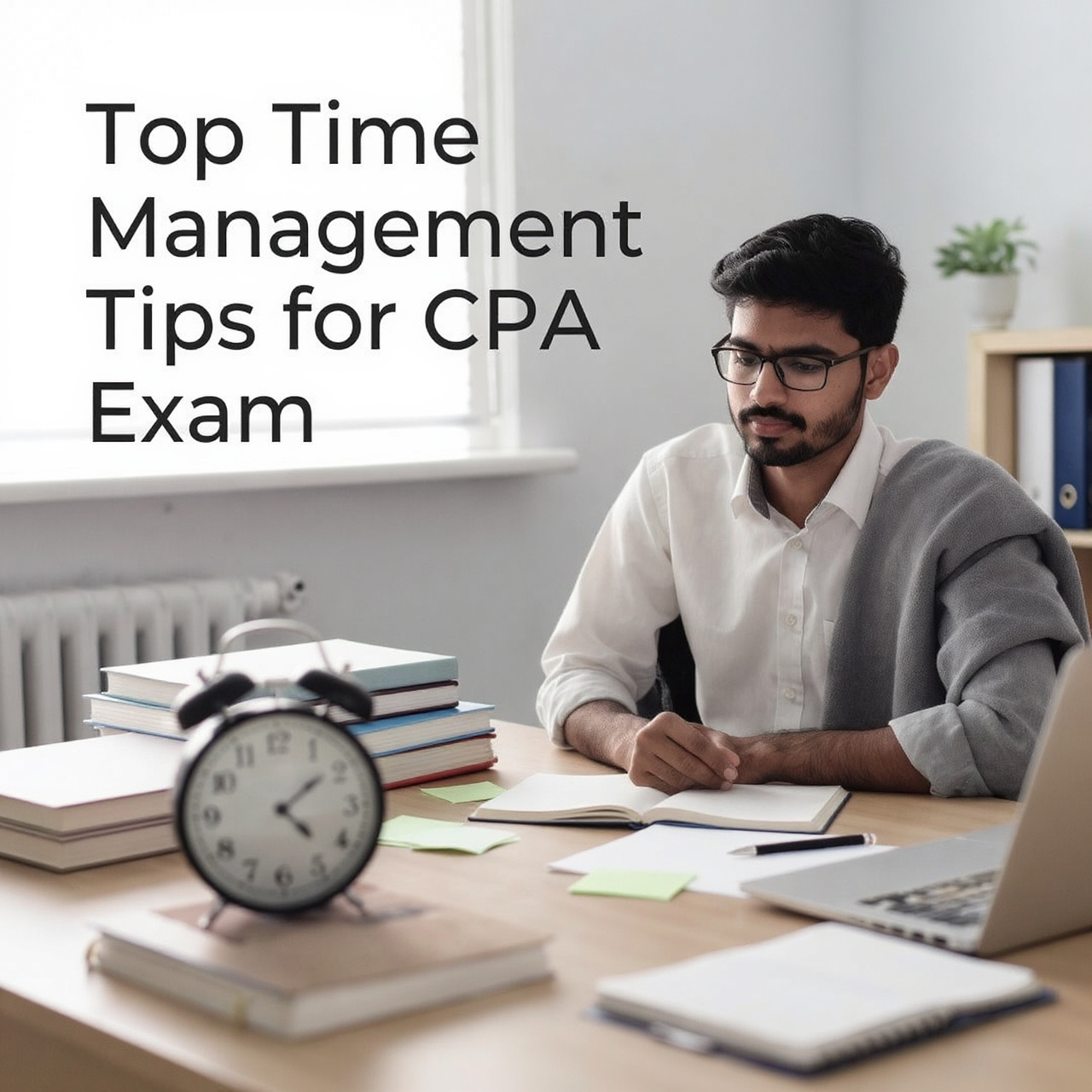
The CPA or Certified Public Accountant exam is one of the most challenging professional accounting exams in the world. There are 4 sections to clear and time management is important. Students sometimes know the answer and concepts but they fail due to poor planning and mismanaging their study hours and exam time.
Before we get into actionable tips, lets see the CPA course details to understand why time management is necessary.
CPA Course Details
The CPA course is a globally recognised and opens doors to prestigious careers in auditing, taxation, consulting and corporate finance. The exam is divided into 4 sections and each one of them is 4 hours long. That means you will have to attempt MCQs, TBSs and in some cases, written communication tasks within strict time limits.
Since each question requires focused preparation and practice, students find it overwhelming to balance studies with work or personal commitments. That is why understanding the CPA course details early on helps in creating a smart timetable. You will know how many hours to dedicate to each section, how much practice is needed and where you should revise more.
Top Time Management Tips for CPA Exam
Here are some of the best time management strategies you can apply while preparing for and attempting the CPA exam:
1. Create a realistic Study Plan
Start by creating a timeline based on your exam date. Organise your preparation into weekly, monthly and daily targets. Give specific hours for reading, practicing MCQs, TBSs and revising. For example- if you are working, you will have to give 2 to 3 hours on weekdays and 5 to 6 hours on weekends. The thing is, just stick to the plan and adjust only if absolutely important.
2. Break Down the CPA Course Syllabus
The CPA course details include 4 sections and each has its own weightage and topics.It becomes less complex when the syllabus is divided into smaller subjects. For example-
- FAR: Split it into standards, transactions and financial statements.
- REG: Break it into taxation, ethics and business law.
This way, you can focus on smaller and manageable parts.
3. Practice under timed Conditions
Studying theory is not enough. The CPA exam is about applying the knowledge under time restrictions. So, regularly practice MCQs and simulations within a set timer.
For MCQs, aim to finish each question in a timed condition. For simulations, you can practice managing longer case studies in around 15 to 20 minutes. Timed practice trains your brain to think fast and reduces panic during the actual exam.
4. Prioritize Weak Areas first
Everyone has strong and weak areas in the syllabus. It is exciting to keep revising the topics you know but that just wastes time. Focus on weaker areas before in your preparation. Once that is stronger, you will feel more confident and your revision will also become easier.
5. Use the 50-40-10 rule for daily study
- 50% of study time → New concepts and reading
- 40% of study time → Practice questions and simulations
- 10% of study time → Quick revision of previously covered material
This balanced approach makes sure that you don’t just read but also remember what you study.
6. Simulate Exam day
A few weeks before the exam, you can give some time for full length practice exams. Sit for the entire 4 hours without any distractions. This will build your stamina and train you to manage time effectively.
For example- you can give:
- 2 hours for MCQs
- 1 hour 30 minutes for simulations
- 30 minutes for revision and reviewing flagged questions.
7. Avoid Procrastination
Time management is not just about planning but also about execution. Procrastination is a major barrier. If you find it hard to focus, use some productivity techniques like-
- The Pomodoro Technique
- Blocking distractions
- Studying in quiet space
Consistency is more powerful than last minute crammings.
8. Revise Strategically
Dont wait until the last week to revise the subjects. Instead, you can schedule regular weekly revisions along with your preparation. This will help you to reinforce the concepts and reduce the time you will need before the exam. Create flashcards for the formulas, standards and tax rules. These allow quick reviews in free time like traveling or waiting.
During the CPA Exam: Time Management tips
Time Management does not end with preparation. It is just as important as in the exam hall.
- Read Instructions quickly
- Answer easy questions first
- Track your time progress
- Dont spend too long on one simulation
Conclusion
Time management is the secret weapon for clearing the CPA exam. From understanding CPA course details to a creating a plan, everything counts. Practice strategically, revise consistently and manage time during the exam itself to succeed. Also, remember that the CPA exam is not about what you know. It is about how well you can use your time to show what you know.

Frequently Asked Questions [FAQs]
- How many hours should I study daily for the CPA exam?
On average, students should give at least 2–3 hours daily if working full-time and 5–6 hours on weekends. Full-time students can spend 4–6 hours a day.
- How much time is needed to complete all four CPA exam sections?
Most candidates take 1 year to clear all four sections. With the right study plan and time management, it is possible to finish within a year.
- How can I manage time during the CPA exam itself?
Read instructions quickly, attempt easy questions first, track progress and avoid spending too much time on a single simulation. Always leave some time for review.
- Is it important to practice full-length mock exams?
Yes. Mock exams can give you real exam pressure and manage 4 hours effectively. Attempting at least 6–8 full-length mocks is strongly recommended.
